
Reviewed by Dr. Matthew Young, DDS
Reading time: 3 minutes
If you have bone loss in your jaw, you may still be able to get dental implants. Whether an implant can be placed depends on how much bone remains, where the bone loss has occurred, and whether bone grafting is needed to create enough support for the implant.
How Bone Loss Affects Dental Implant Placement
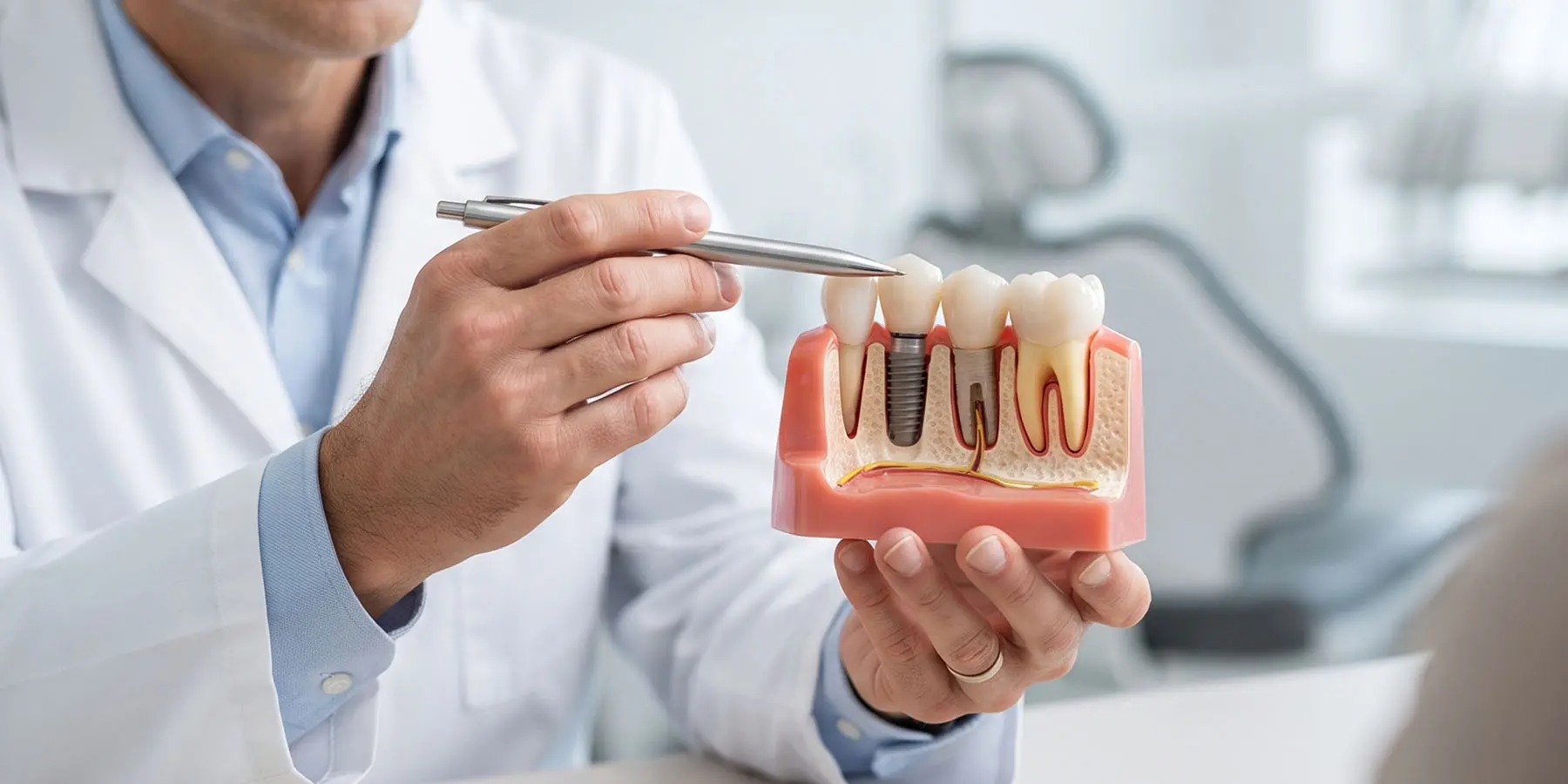
Dental implants are placed directly into the jawbone and need adequate surrounding bone for stability and integration during healing. Loss of bone height, width, or density can make placement more difficult.
The location is also important because structures such as the sinus cavities in the upper jaw and nerves in the lower jaw can affect where an implant can be positioned.
At Young Dental, we can evaluate the bone at the implant site to see if there is enough support for implant placement.
How Is Bone Loss Evaluated Before Dental Implants?
Dental imaging allows us to assess the amount and condition of the available bone and its relationship to surrounding structures. A clinical examination also evaluates the gums, nearby teeth, bite, and overall health of the mouth.
This information helps determine the appropriate implant size and position, as well as whether there is sufficient bone for placement. It can also identify areas where additional treatment may be necessary.
How Bone Grafting Supports Dental Implant Placement
Bone grafting may be recommended when there is not enough bone to support an implant. The procedure adds grafting material to the area, allowing new bone to develop as it heals.
Depending on the extent of bone loss, a graft may be performed at the time of implant placement or as a separate procedure beforehand. Once the area has healed and sufficient bone is available, implant treatment can proceed.
Not everyone with bone loss needs a bone graft. The decision depends on the amount and location of the remaining bone.
Are Dental Implants an Option for You?
At Young Dental, we can assess your jawbone and oral health to determine which options may be appropriate for replacing a missing tooth. Dr. Matthew Young has extensive experience in implant dentistry and advanced implant treatment, including cases that require bone grafting or other procedures to prepare for implant placement.
To book an appointment at our dental office in San Francisco, call (415) 392-8611. Visit us at 490 Post St STE 830, San Francisco, CA.
FAQs
Can the jawbone grow back on its own after tooth loss?
Jawbone does not grow back on its own after tooth loss. Without stimulation from a tooth root, the bone in that area can gradually decrease in height and width.
Does osteoporosis prevent you from getting dental implants?
Not necessarily. Having osteoporosis does not automatically rule out dental implants. Your overall health, bone quality, medications, and the condition of the jawbone should be evaluated when determining whether implant treatment is appropriate.
How long after losing a tooth does jawbone loss begin?
Changes in the jawbone can begin within the first few months after a tooth is lost. Bone loss is generally greatest during the first year, although changes can continue over time.
How long after a bone graft can you get a dental implant?
Timing varies depending on the type and extent of the graft and how the area heals. Some implants can be placed with a graft, while other cases require several months of healing before implant placement.