
Reviewed by Dr. Matthew Young, DDS
Reading time: 3 minutes
While no dental restoration lasts forever, dental implants are one of the longest-lasting tooth replacement options available in modern dentistry. Knowing what affects their lifespan provides a clearer picture of what contributes to long-term implant success.
How Many Years Can a Dental Implant Last?
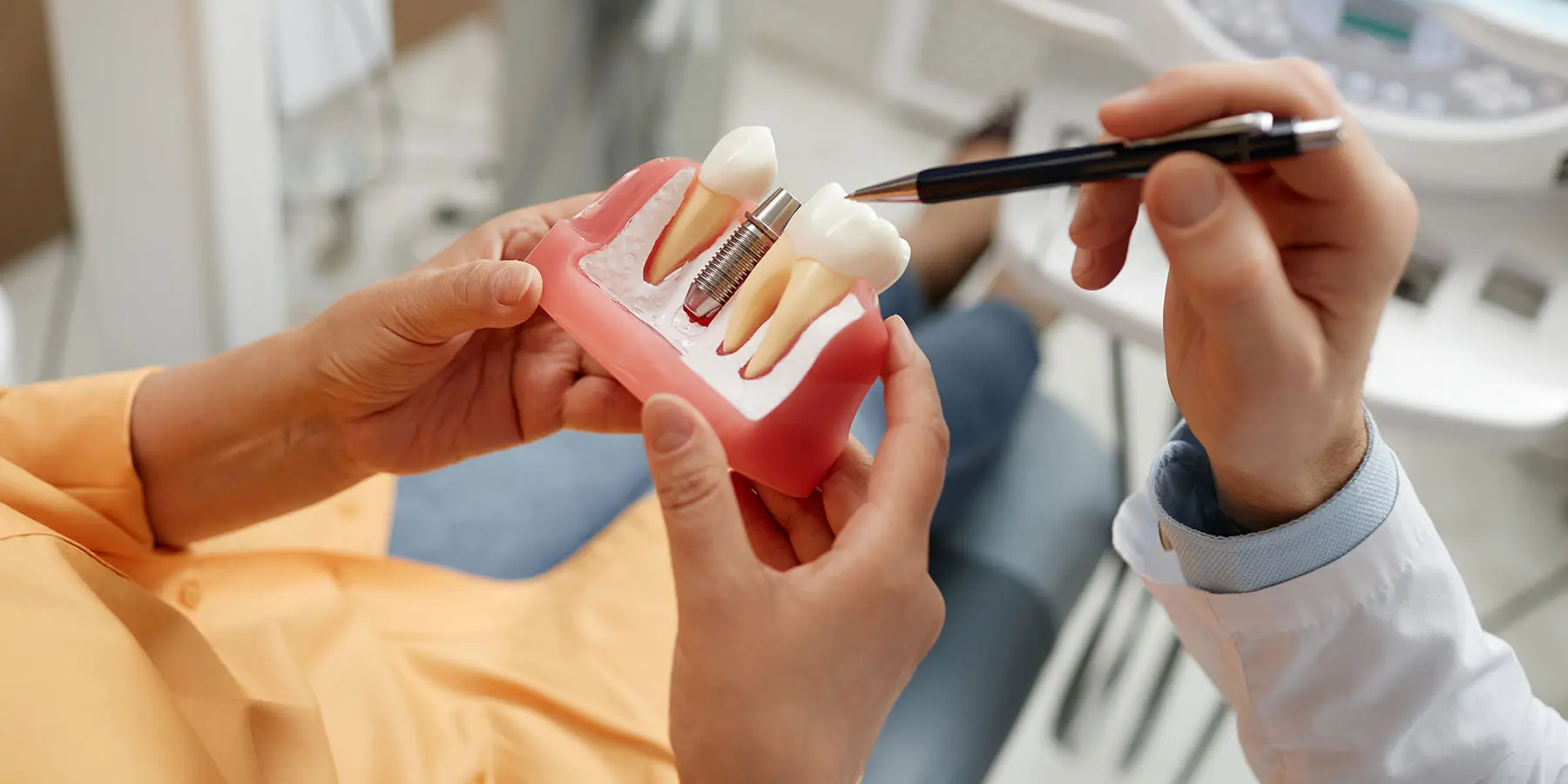
When cared for properly, dental implants can last a lifetime. The titanium implant post is designed to fuse with the jawbone, creating a stable foundation that can remain functional for many years. While the implant itself often lasts for decades, the crown attached to it may eventually need to be repaired or replaced due to normal wear.
What Factors Affect the Lifespan of Dental Implants?
Several daily habits and health factors play an important role in the long-term success of a dental implant.
Oral Hygiene
Keeping the area around a dental implant clean is essential for long-term success. Plaque buildup can lead to peri-implant disease, which damages the gums and the bone that supports the implant. Brushing, flossing, and regular professional cleanings help reduce this risk.
Smoking
Smoking slows healing and increases the risk of complications after implant placement. It also contributes to gum disease, which can affect the long-term stability of a dental implant.
Teeth Grinding and Clenching
Grinding or clenching places excessive pressure on dental implants and their crowns. If you grind your teeth while sleeping, a custom night guard may be recommended to help protect the restoration.
Bone Quality and Overall Health
Dental implants rely on healthy bone for long-term support. Conditions such as significant bone loss or poorly controlled diabetes can affect healing and implant success.
Regular Dental Visits
Regular dental exams allow the implant, surrounding bone, and gum tissue to be monitored. Early detection of potential concerns can help prevent more significant problems.
Can a Dental Implant Be Replaced?
If a dental implant fails or does not properly integrate with the surrounding bone, it can be removed. Once the area has healed, another implant may be placed if there is enough healthy bone to support it. In some cases, bone grafting may be recommended first.
The appropriate treatment depends on the cause of the problem and the condition of the surrounding tissues.
Dental Implant Care at Young Dental SF
Long-term dental implant success begins with careful planning, precise treatment, and ongoing care.
Dr. Matthew Young has more than 15 years of experience in implant dentistry and currently serves as President of the American Academy of Implant Dentistry (AAID). Before recommending treatment, he carefully evaluates bone support, gum health, bite function, and other factors that influence long-term success. He also provides his patients with guidance on caring for dental implants after treatment, including oral hygiene and routine follow-up visits, to support healthy, lasting results.
Whether you are considering dental implants for the first time or need an evaluation of an existing implant, our team at Young Dental can develop personalized treatment recommendations tailored to your needs and long-term oral health goals.
Dentist in Downtown San Francisco, CA
To book an appointment at our dental office in San Francisco, call (415) 392-8611. Visit us at 490 Post St STE 830, San Francisco, CA.
FAQs
Many dental implants last several decades, and some can last a lifetime with proper oral hygiene, regular dental care, and healthy supporting bone.
While the titanium post often lasts much longer, the crown typically lasts 10 to 15 years or longer before it may need repair or replacement because of normal wear.
One of the most common causes is peri-implant disease, an infection and inflammation affecting the tissues around the implant. Smoking, poor oral hygiene, and insufficient bone support can also increase the risk of implant failure.
Dental implants should be brushed and cleaned every day, just like natural teeth. Daily oral hygiene, regular professional cleanings, and additional cleaning aids, such as implant floss or interdental brushes, can help keep the implant and surrounding tissues healthy.