
Reviewed by Dr. Matthew Young, DDS
Reading time: 3 minutes
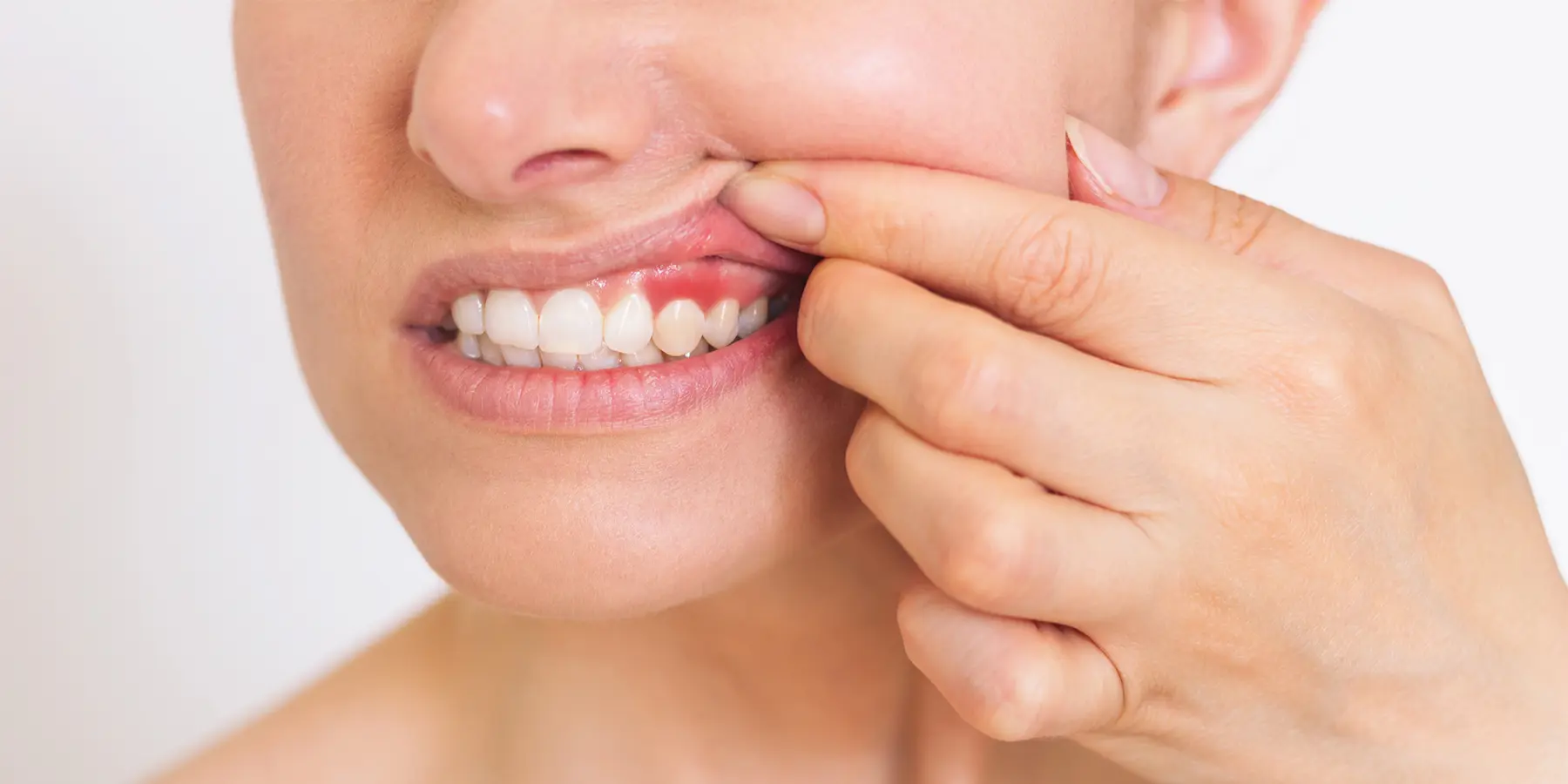
Peri-implantitis can cause red or swollen gums, bleeding, tenderness, discharge, or gum recession around a dental implant. Because the condition also causes progressive bone loss that may not be noticeable without dental imaging, peri-implantitis can sometimes develop without obvious symptoms.
What Is Peri-Implantitis and What Causes It?
Peri-implantitis is an inflammatory condition that affects the tissues around a dental implant and causes progressive loss of supporting bone. It is primarily associated with bacterial plaque that accumulates around the implant and beneath the gumline.
Peri-implantitis differs from peri-implant mucositis, which causes inflammation around an implant without supporting bone loss. Once inflammation is accompanied by progressive bone loss, the condition is classified as peri-implantitis.
Several factors can increase the risk of developing peri-implantitis, including:
- Inadequate plaque control
- Previous periodontal disease
- Smoking
- Diabetes
- Difficulty cleaning around the implant or restoration
Without treatment, continued bone loss can compromise the tissues that help keep the implant stable.
Signs of Peri-Implantitis Around a Dental Implant
Peri-implantitis can cause symptoms in the gums surrounding a dental implant.
Possible signs include:
- Red or swollen gums
- Bleeding, including during brushing
- Tenderness or discomfort
- Pus or other discharge
- Gum recession that exposes more of the implant
Bone loss itself may not be noticeable without dental imaging. For this reason, professional examinations are important even when an implant does not hurt.
How Is Peri-Implantitis Treated?
Treatment for peri-implantitis focuses on controlling inflammation, removing bacterial buildup, and cleaning the implant surface. The treatment recommended depends on the extent of inflammation and supporting bone loss.
At Young Dental, we use the Fotona LightWalker AT-S dual-wavelength dental laser as one option for treating peri-implantitis. Its Er and Nd wavelengths can be used to remove diseased tissue, decontaminate the implant surface, reduce bacteria, and support healing of the surrounding tissues.
Additional treatment may be needed when significant bone loss is present. In some cases, surgical treatment and bone grafting may be considered to address the damaged tissues around the implant.
When Should You Have an Implant Checked?
Changes around a dental implant that persist or worsen should be evaluated. An examination can determine whether peri-implantitis or another problem is present and whether the supporting bone has been affected.
To book an appointment at our dental office in San Francisco, call (415) 392-8611. Visit us at 490 Post St STE 830, San Francisco, CA.
FAQs
Can peri-implantitis cause a dental implant to fail?
Yes. Progressive loss of supporting bone can eventually affect the stability and function of an implant. Early diagnosis and treatment can help limit further tissue damage.
Is peri-implantitis painful?
Not always. Peri-implantitis can develop without significant pain, particularly in its earlier stages, which is one reason routine implant monitoring is important.
Can peri-implantitis occur years after getting a dental implant?
Yes. Peri-implantitis can develop after an implant has been in function for years. Continued home care and professional monitoring remain important throughout the life of the implant.